

Working Dogs for Conservation (WD4C) turns high-energy rescue dogs into some of the world’s most effective tools for protecting wildlife and wild places. From their home base in Missoula, they train conservation detection dogs and deploy them across the United States and around the globe to track rare species, stop poachers, find invasive plants and animals, and support environmental justice in communities that are often overlooked.
Mission and Origins
WD4C was founded by four women who adapted techniques from narcotics, cadaver, and search-and-rescue dog work to conservation, pioneering ways to harness canine scent detection for ecological challenges. Their mission is to protect wildlife and ecosystems while giving “career-change” and rescued dogs a second chance as valued conservation partners.
From the beginning, the organization has focused on combining scientific rigor with a deep commitment to animal welfare: dogs are carefully selected, trained to high standards, monitored throughout deployments, and guaranteed a home and soft couch for retirement when their field careers end.
Why Dogs Make Exceptional Conservationists
Detection dogs can locate scents that humans and machines routinely miss, moving quickly across rugged terrain and dense vegetation. Conservation detection dogs are often many times more efficient than human searchers at developing population and habitat data, especially for elusive or low-density species.
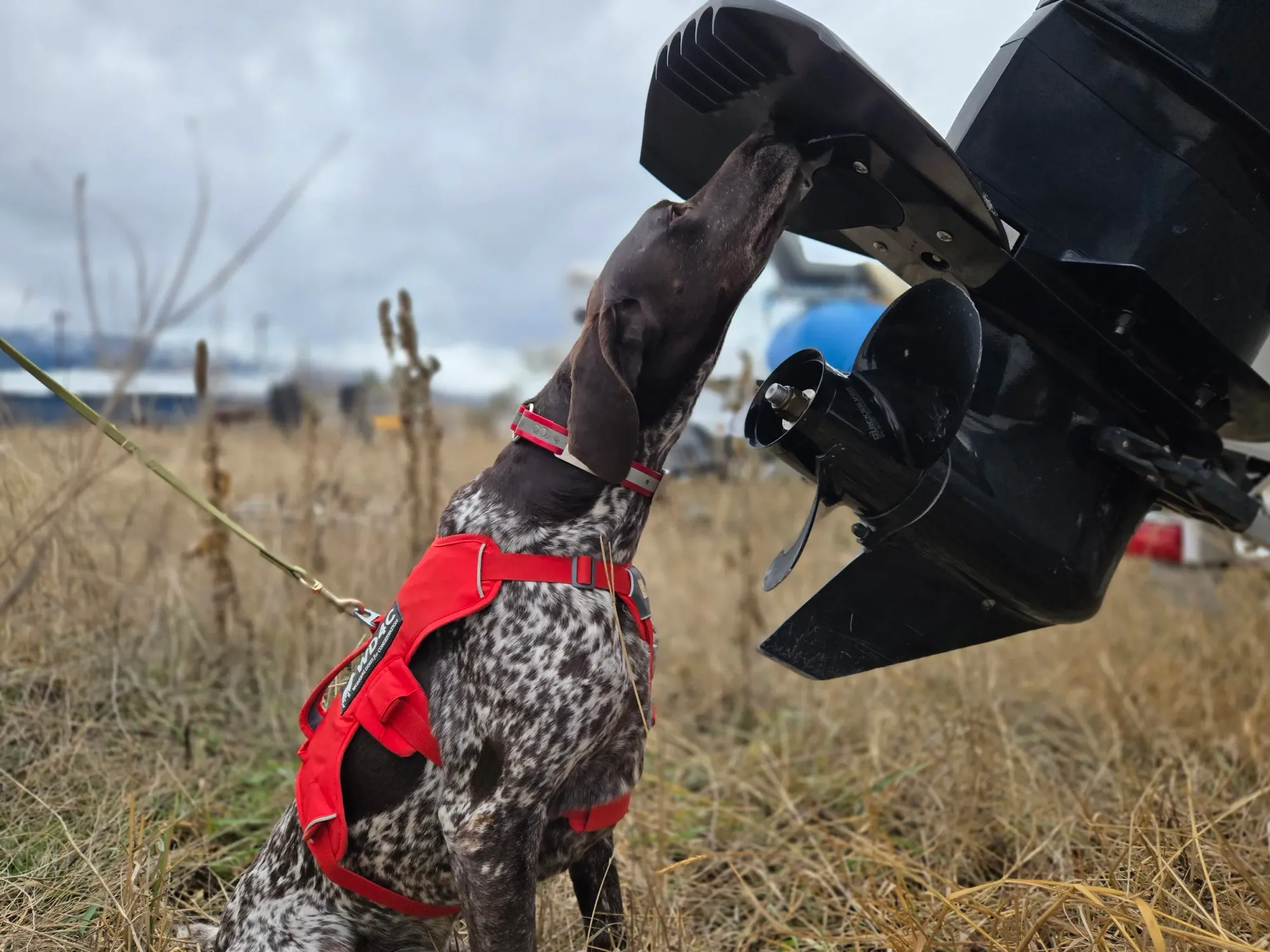
Instead of relying only on visual sightings or camera traps that detect a limited slice of wildlife, dogs follow scent to scat, carcasses, or other traces from many individuals, including young and non-dominant animals. That gives scientists and land managers richer, less biased data to guide decisions.
A Unique Training and Research Hub
Although WD4C works worldwide, its 44‑acre headquarters outside Missoula is purpose-built as a training and operational hub. The facility includes multiple fenced yards, an agility field, varied habitats for field exercises, quarantine and housing areas for dogs, and indoor training spaces for all-weather work.
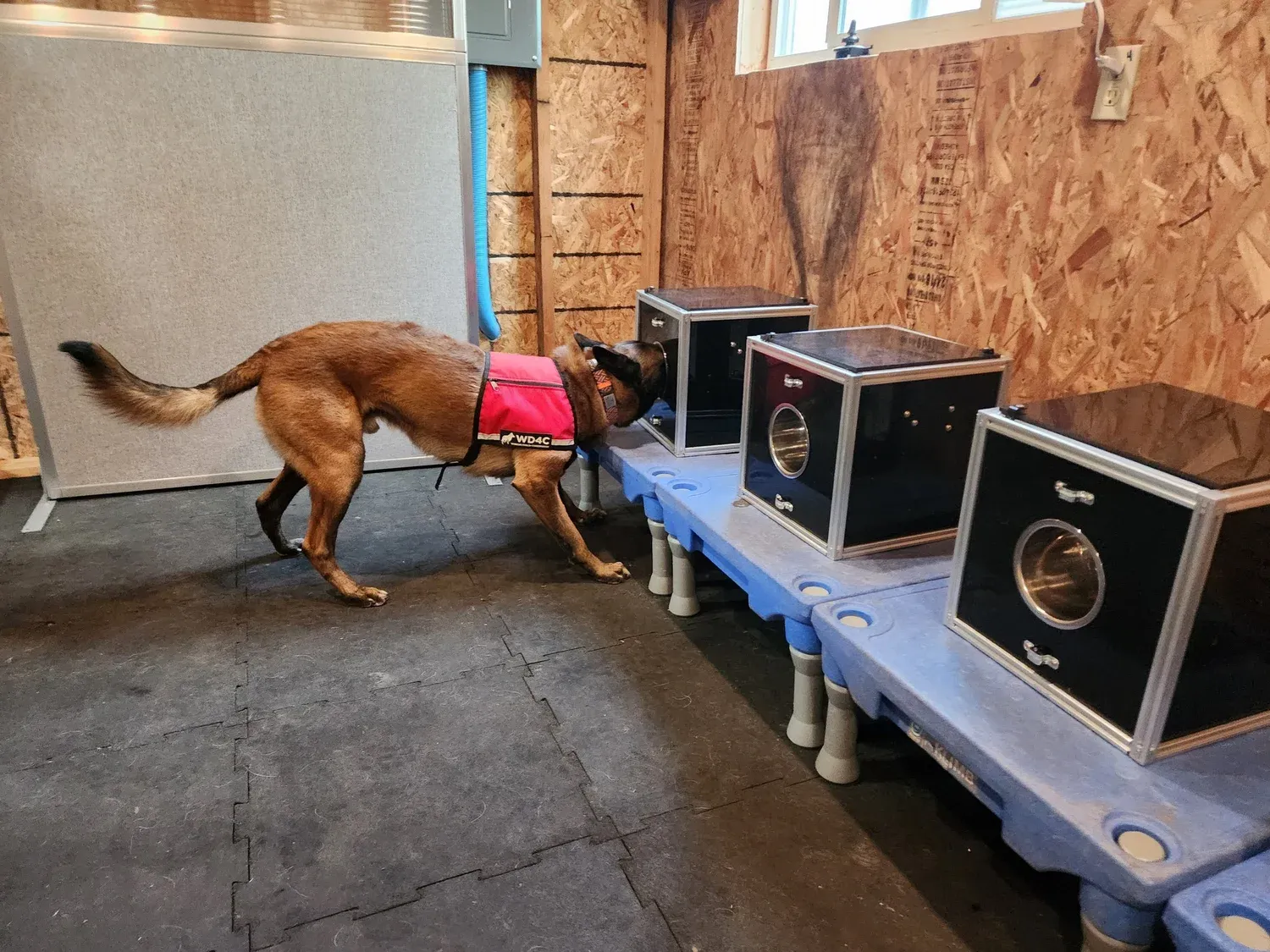
Inside the training center, staff maintain a prep area with ultra-cold freezers for specimen storage and a dedicated space for double-blind scent studies with video monitoring. WD4C is one of the only institutions using olfactometers in field-focused work, allowing them to precisely test and refine dogs’ scent discrimination for challenges such as wildlife disease organisms and individual invasive seeds.
Ecological Monitoring: Finding the Hard-to-Find
Ecological monitoring is one of WD4C’s core services, helping answer crucial questions: where species live, how many there are, and what they need to survive. Conservation dogs locate scats, carcasses, and other signs that allow researchers to map distributions, estimate populations, and understand habitat use much more efficiently than traditional methods alone.
Their projects have ranged from carnivore monitoring and rare-species surveys to connectivity studies that reveal where animals are quietly reclaiming landscapes. This information feeds directly into management decisions about protected areas, wildlife corridors, and species recovery plans.
Biosecurity: Stopping Invaders and Disease
In biosecurity work, WD4C trains dogs to detect invasive species and other biological threats early, when they can still be contained or eradicated. Teams have searched for noxious weeds, invasive snails, snakes, and other organisms that threaten ecosystems and economies, often locating them more quickly and reliably than human spotters.
On islands and other fragile landscapes, dogs search for invasive rodents and signs of their presence, safeguarding seabirds and endemic species that have no defenses against introduced predators. WD4C also develops dog teams to detect wildlife diseases and pathogens, adding an important tool for managing outbreaks and protecting wildlife, livestock, and, ultimately, human communities.
Ending Wildlife Crime
Another major pillar of WD4C’s work is ending wildlife crime through canine-assisted law enforcement. Detection dogs are trained to find weapons, ammunition, snares, bushmeat, ivory, rhino horn, pangolin scales, and other contraband before or after animals are killed.
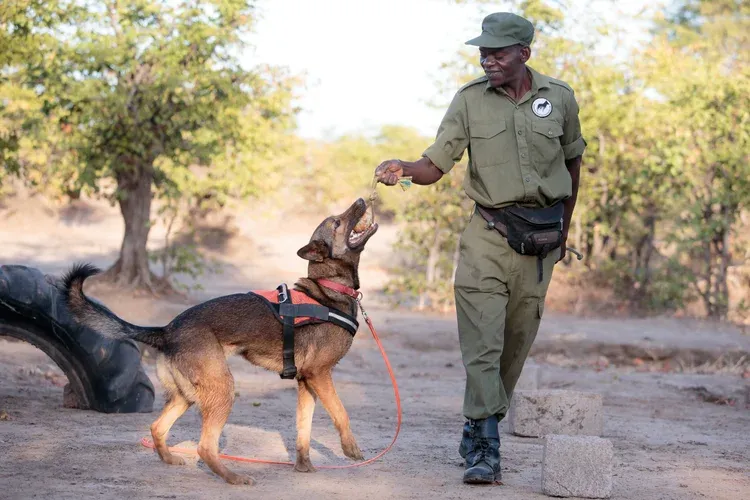
Anti-trafficking and anti-poaching programs have taken WD4C teams to regions such as Zambia’s Luangwa Valley, the Serengeti ecosystem in Tanzania, Namibia, and parts of Central Asia. There, canine units work alongside local agencies to disrupt trafficking routes, intercept contraband at checkpoints, and support successful prosecutions, while building lasting capacity for dog-based law enforcement.
Environmental Justice on the Ground
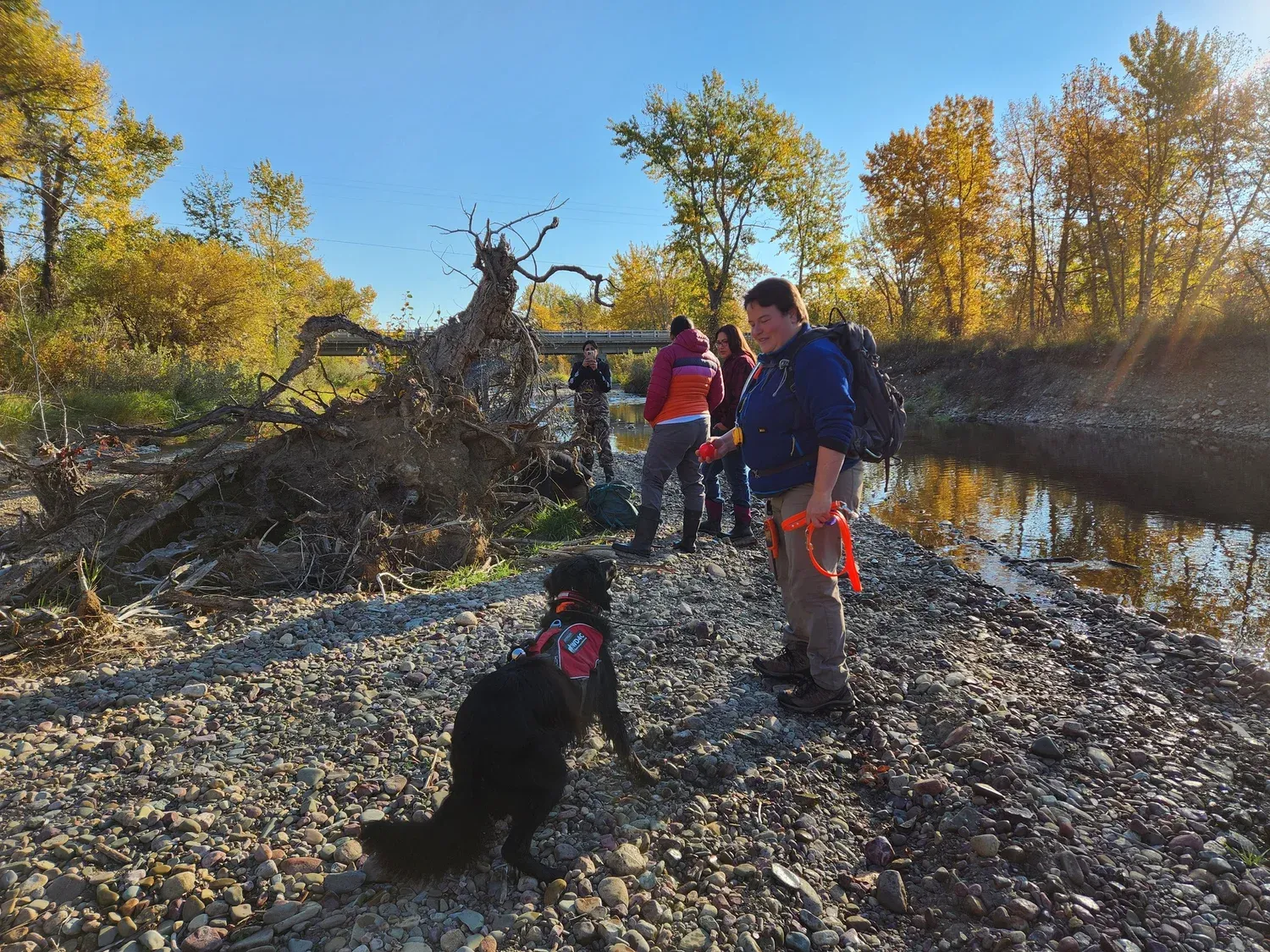
In its environmental justice work, WD4C uses conservation dogs to help address environmental inequities, particularly in Indigenous and underserved communities. Working in partnership with local leaders, the dogs help identify contaminants and monitor ecosystem health in places where people rely on traditional foods, medicines, and materials.
For example, dogs have been deployed to locate mink and river otter scat on tribal lands so laboratories can test for pollutants in waterways used for fishing and gathering. The resulting data strengthens community-led advocacy, giving residents credible evidence to push for cleanup, stronger protections, and restoration of their homelands.
A Global Footprint and Expanding Impact
WD4C’s dogs have worked across dozens of U.S. states and more than 30 countries, on over a hundred different target scents spanning plants, mammals, birds, reptiles, fish, invertebrates, diseases, and law-enforcement targets. This breadth highlights both the versatility of well-trained conservation dogs and the organization’s drive to push the boundaries of what canine detection can do for conservation.
The organization collaborates widely with agencies, NGOs, researchers, and industry partners, offering everything from study design and fundraising support to field deployment, GIS mapping, data analysis, and final reporting. Many projects are fee-for-service, while especially innovative or high-risk work is often supported by donors, allowing WD4C to pilot new approaches that partners can then scale up.
Giving Rescue Dogs a New Purpose
At the heart of Working Dogs for Conservation is the idea that saving wildlife and saving dogs can go hand in hand. Many of their canine partners are high-drive shelter dogs or “career change” animals that might otherwise be overlooked or euthanized because they do not fit typical pet homes or traditional working roles.
By channeling that energy into scent work, WD4C gives these dogs fulfilling, life-saving careers while equipping conservationists and communities with a fast, flexible, and remarkably powerful ally in the effort to protect wildlife and wild places.


